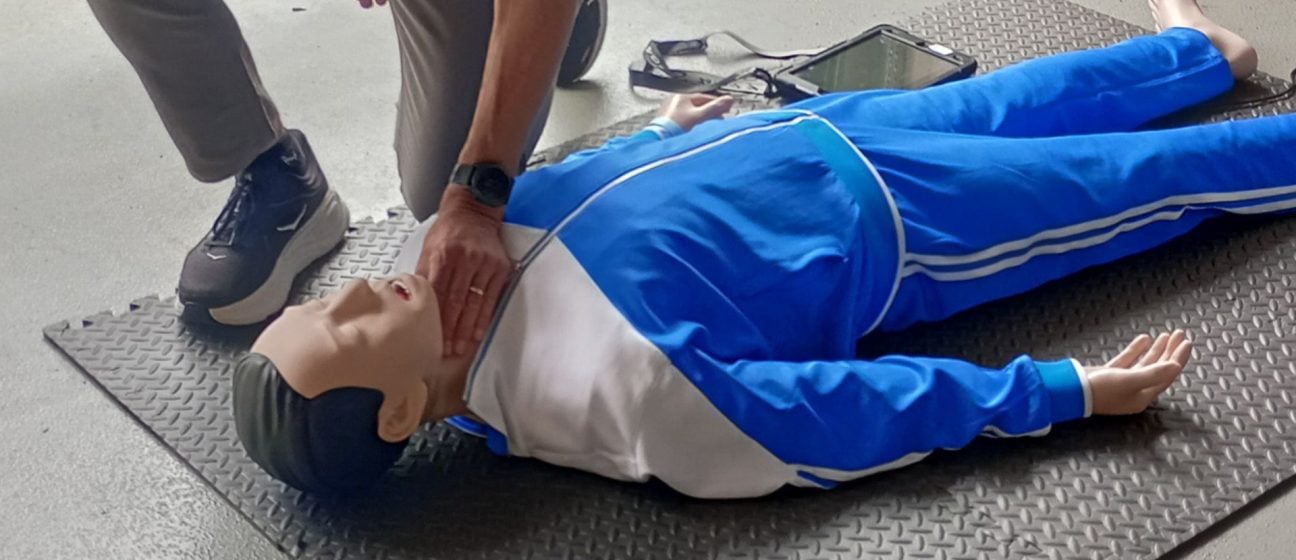
The IMPACT team undertook 3 days of research with the public to understand how bystanders can feel more confident and capable of making a difference.
The IMPACT team – the research arm of Devon Air Ambulance – undertook a 3-day research activity to help evaluate responses in a bystander scenario.
This week, Exeter Fire Station hosted a three-day research activity led by IMPACT (The Centre for Post-Collision Research, Innovation and Translation), in partnership with Vision Zero South West.
The activity brought together participants from across the emergency services alongside members of the public to focus on the question: what happens in those first few minutes before clinical help arrives?
Why bystanders matter
Often, the first people on the scene of a serious incident are not clinicians, but bystanders: members of the public or non-clinical responders. Their early actions can influence outcomes, yet until recently, this phase of care has received relatively little scientific attention.
IMPACT’s Bystander project seeks to change that. By building a clearer evidence base, the programme aims to better understand how bystanders can safely and effectively support those injured in road traffic collisions, helping to reduce both physical harm and psychological trauma.
Inside the research
Over three days, participants have taken part in structured research activities designed to simulate real-world scenarios. These activities explore how individuals assess an injured person and what actions they feel confident taking in those early, critical moments, from checking a pulse to conveying information on a 999 call.
The research is specifically looking at confidence and competency in bystander situations and identifying where people feel equipped to act, and where barriers or uncertainties remain. The findings will help shape future training, communication, and support tools for both the public and professional responders.
Working towards better outcomes
The project forms part of a wider ambition shared by IMPACT, Vision Zero and the Road Safety Trust: to improve outcomes following road traffic collisions by strengthening every link in the chain of survival. Post-collision care is a vital component of this approach, recognising that what happens after an incident can be just as important as preventing it.
Devon Air Ambulance CEO, Greg Allen, participated in the activity himself, and conveyed his admiration for the project:
The work that the IMPACT team is doing around the Bystander Enablement Programme is so important to Devon Air Ambulance and to the community. Today I have been working through some scenarios with actors, with simulated scenarios, and for me personally it has been a very useful experience to see how this research can be applied quite practically. The IMPACT team are doing incredibly innovative things – world-class, leading research that is going to make a difference.
Greg Allen, Devon Air Ambulance CEO
By bringing together research, real-world experience, and cross-sector collaboration, the Bystander project aims to ensure that those first on the scene feel better supported, more confident, and more capable of making a difference.
Read more about the IMPACT – the research arm of Devon Air Ambulance