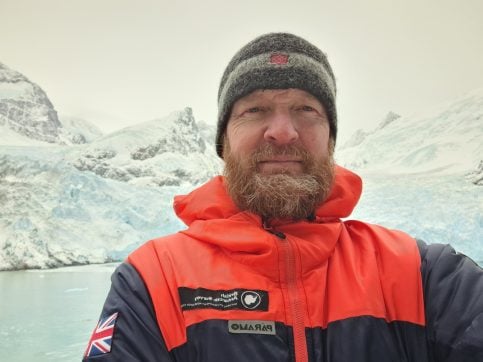
The expertise of Devon Air Ambulance clinicians is sought as far away from Devon as the Antarctic. Paramedic, Nigel Lang, shares his account.
When we talk about the reach of Devon Air Ambulance, we usually mean across Devon and sometimes to neighbouring counties, but for one of our clinicians, that reach recently extended far further – almost as far as it’s possible to go…
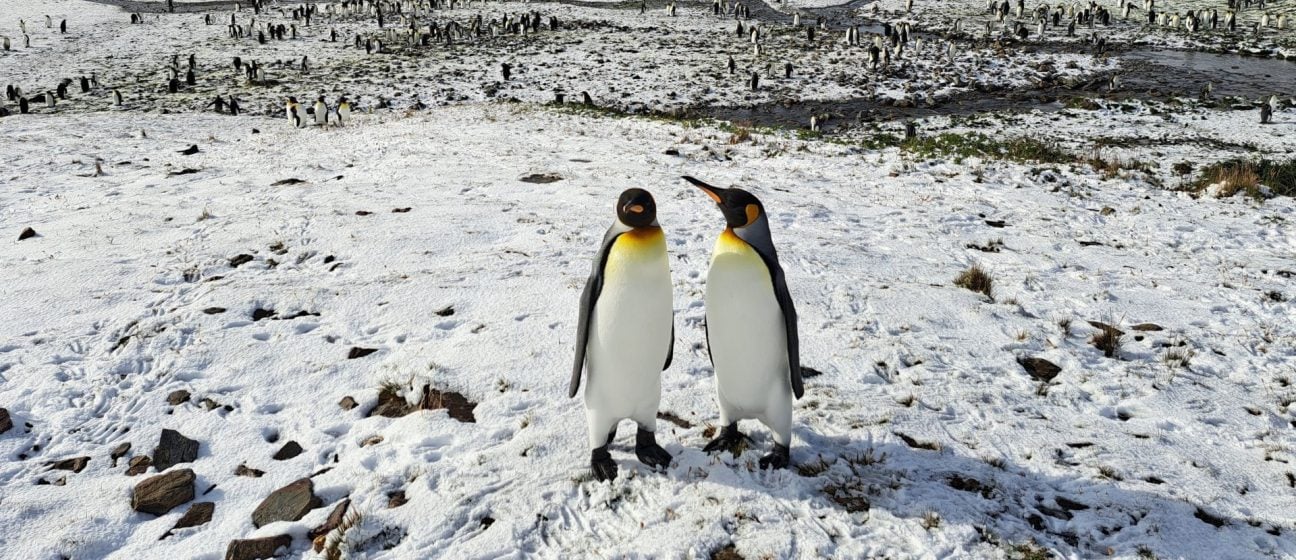
…Where other than scientists and support staff, the biggest population is penguins.
Devon Air Ambulance crew member, Critical Care Paramedic Nigel Lang, recently returned from a two-month secondment with the British Antarctic Survey (BAS), supporting scientific teams working in one of the most remote environments on Earth. With BAS covering all costs, Devon Air Ambulance supported Nigel’s professional development, knowing the experience would benefit patients back home.
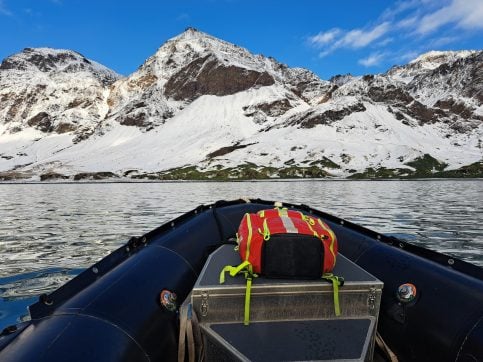
Based on Signy Island in the South Orkney Islands, Nigel became part of a small, close-knit team living and working in isolation, surrounded by ice, wildlife, and ever-changing weather. The station accommodates just a handful of people, which requires everyone to share responsibility, not only for research, but for one another’s safety and wellbeing too.
Access to healthcare in Antarctica is limited. In Devon, with the support of the charity’s two emergency aircraft, help is never further than 20 minutes’ flight away. In the Antarctic to reach the nearest fully-equipped hospital you’d have to travel over a thousand kilometres, and help may take days to arrive. In this environment, Nigel’s role was not just about responding to emergencies, but anticipating them; planning for everything from injuries in the field to the effects of extreme cold and prolonged isolation. Nigel reflects on quite a different experience to his day-to-day work at Devon Air Ambulance.
The work is very different. You can’t rely on immediate backup or specialist services. It requires careful thinking, preparation, and adapting how you deliver care with the resources you have.
For Nigel, much of the experience centred on preparing for situations rather than actively responding to them. This included maintaining medical equipment, supporting training for other team members, and thinking through how to manage serious incidents where evacuation might be delayed.
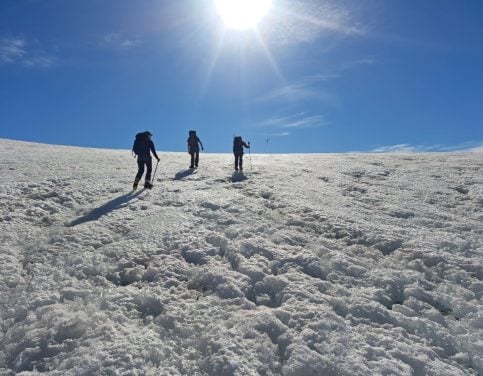
The environment itself adds complexity. Signy Island’s terrain is steep and rugged, with glaciers, rocky slopes and rapidly changing weather conditions. A routine task can quickly become challenging when visibility drops or winds pick up. Despite this, the experience also offered perspective, said Nigel.
“Living in such a small team reinforces the importance of communication, trust and shared responsibility – qualities that are just as vital back home.
“There’s a strong sense of looking out for each other. When you’re working in such close quarters, how you support one another really matters.”
The work underway on Signy Island is part of a wider international effort to understand our changing planet. From tracking wildlife populations to studying climate systems, the research carried out there contributes to global knowledge about environmental change.
For Nigel, being part of that effort was both humbling and motivating.
It makes you reflect on how connected everything is. Even in a place that feels so remote, the work being done there has real relevance to all of us
Nigel’s time in Antarctica may have been a world away from Devon, but the skills he used are the same ones that underpin his work with our patients every day: careful judgement, adaptability, and a calm approach to the unexpected.
It’s a reminder that the expertise within our team doesn’t just serve our local community, it’s recognised and valued even at the farthest reaches of our planet.
Learn more about Nigel and his contribution to research at Devon Air Ambulance or read more Devon Air Ambulance news.