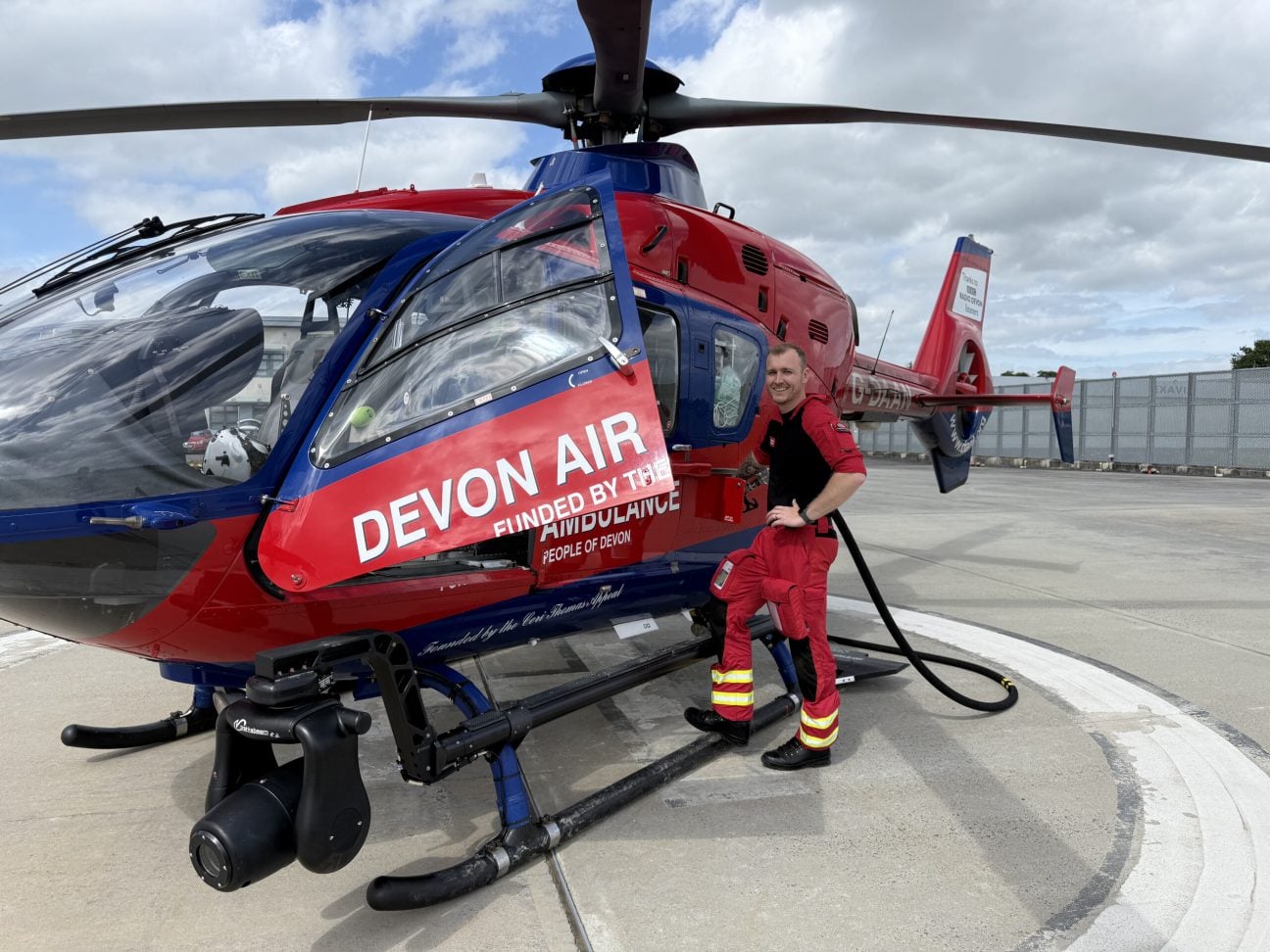
The service remains fully operational and committed to reaching patients in need.
In recent months, aviation fuel prices have more than doubled, rising from around 74p per litre in early March to approximately £1.60 per litre. Based on these increases, we estimate our annual aviation fuel costs could surge from around £177,000 in 2025 to approximately £384,000 this year, an increase of more than £200,000.
Despite this, we want to be clear: our crews are still responding as normal across Devon.
Our Chief Executive, Greg Allen, said we had planned for situations like this and built financial resilience into our operations. He said:
We plan carefully for scenarios like this and hold reserves to protect our ability to respond, so despite the huge pressures from the cost of living and the hike in aviation fuel, we’re still able to run our service as normal.
We operate two helicopters, based in Exeter and North Devon, alongside a fleet of critical care cars. Together, our aircraft use around 240,000 litres of fuel each year, with additional cost pressures coming from rising diesel prices for our vehicles.
Demand for our service remains as urgent and unpredictable as ever.
“Anyone, at any time, might need our service. Accidents and emergencies can’t be planned for, and that’s why we’re needed – to get critical care to patients at the scene as quickly as possible, maximising their life chances.”
Unlike commercial operators, we cannot pass rising costs on. Every extra pound we spend on fuel must be raised through public donations. As a charity, we receive no direct government funding for our daily operations, and we do not benefit from tax relief on aviation fuel leaving us fully exposed to price increases. Greg said:
Every extra pound spent on fuel is a pound that has to be found through donations.
To help maintain resilience, we hold on-site fuel reserves at both of our airbases, ensuring we can continue flying even if supply is disrupted. However, we recognise that sustained price increases present an ongoing challenge, particularly at a time when many charities are facing financial pressures.
We are continuing to monitor fuel supply and pricing closely and are working with partners to develop contingency plans where needed.
‘This situation reflects wider pressures facing the sector, as many organisations navigate rising costs alongside a challenging fundraising environment’, Greg said.
Despite these challenges, our focus remains unchanged.
‘We’re here for anyone who needs us, whenever and wherever that may be,” he added. “We rely entirely on the generosity of the public to keep our service flying, and that support has never been more important.’