Why bystanders are essential to the timely delivery of patient care.
The real story behind intervention before clinicians arrive
When an emergency unfolds, every second counts… and long before a clinician or critical care team reaches the scene.
In those crucial first moments, the people already present aren’t ‘just bystanders’ they are the first link in the chain of survival, and their willingness to act can mean the difference between life and death.
For years, the so‑called bystander effect has been used to suggest that people freeze in emergencies. The myth says that when something terrible happens, most of us wait for someone else to take the lead. But modern evidence, and countless real‑world incidents, show something very different: people do step up to help.
And when it comes to cardiac arrest, the impact of that early intervention is extraordinary.
CPR and defibrillation: every second counts
A person in cardiac arrest needs help immediately. Their chance of survival falls by around 10% for every minute without CPR. Before a clinician arrives, oxygenated blood supplied through bystander CPR keeps the brain alive. A shock from a nearby defibrillator can restart the heart entirely.
This means the most important person in a cardiac arrest is the person already standing there.
The reality: bystanders do intervene
The word ‘bystander’ is a bit of a misnomer as it implies a default position of non-intervention, being passive and leaving action up to someone else who might know more. However, recent research has overturned the old assumption that people simply stand by. In fact, in the overwhelming majority of emergencies, members of the public are swift to step in.
- When more people are present, the chances that someone will act often increase, not decrease.
- People are especially likely to help when they understand the situation, what’s more, few situations are clearer, or more urgent, than a cardiac arrest.
- Far from paralysis, what we see time and time again is courage, instinct, and compassion.
Why confidence matters
Most people want to help, but hesitation is not unheard of. Quite often people already at the scene are:
- Unsure what’s happening
- Worried about making things worse
- Doubtful about what to do
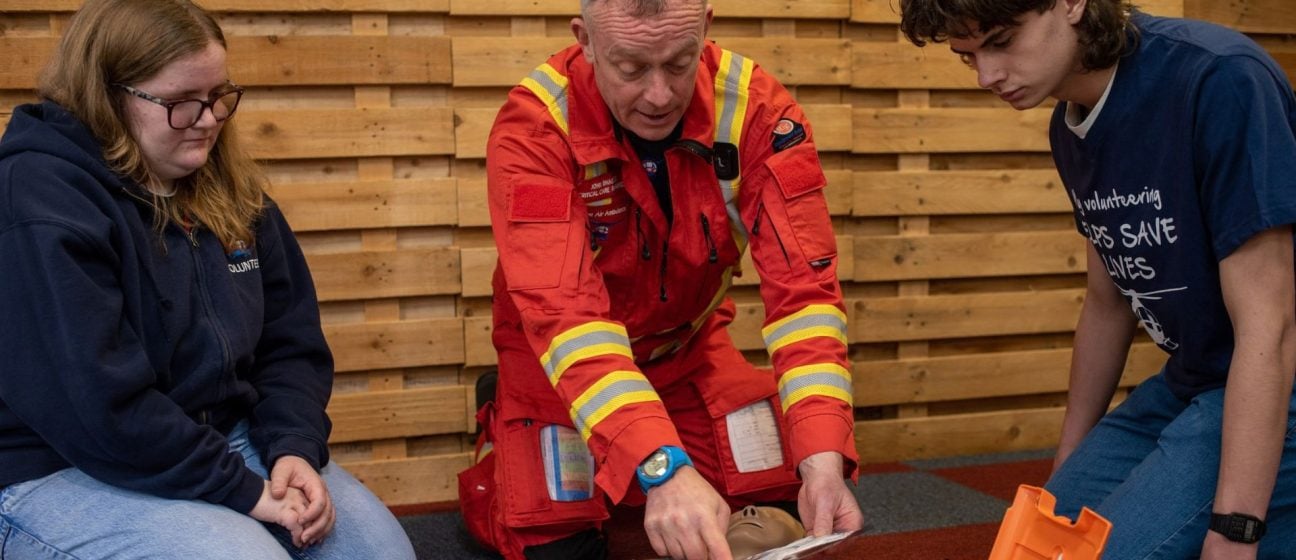
This is why familiarising communities with CPR and defibrillators is so powerful. When ordinary people feel confident enough to start chest compressions or fetch and apply a defib, their actions can keep someone alive until clinicians arrive and take over.
Bystanders can be lifesavers
Every day, clinicians attend incidents where the outcome has been transformed by the actions of a passer‑by, a family member, a teammate, or a stranger in a shop, car park or street corner. The reality is: members of the public aren’t bystanders; they are rescuers. And they are at the very beginning of survival.
You too can take action in an emergency.
If you learn CPR, if you familiarise yourself with the location of your nearest defibrillator, if you choose to step forward when someone collapses, you could be the reason a parent, partner or child makes it home.
Emergency care begins with you. Learn more about CPR & Defibrillator training so you can feel confident if you ever need to be.