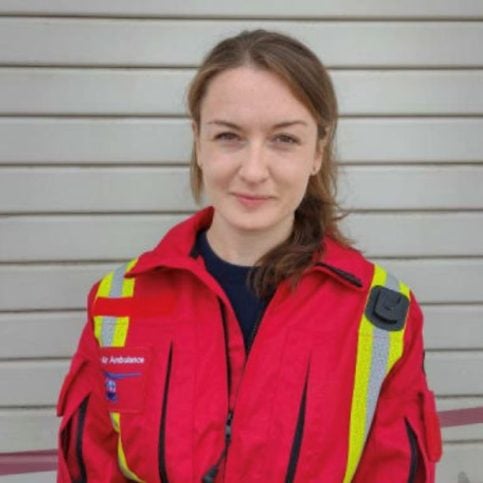
A journey into pre-hospital medicine by Emily Foote - Emergency Medicine Trainee & Devon Air Ambulance Doctor
A journey into pre-hospital medicine by Emily Foote – Emergency Medicine Trainee & Devon Air Ambulance Doctor
I have wanted to be a Prehospital Emergency Medicine (PHEM) Doctor since the start of my medical career. Working with a team of highly skilled paramedics and pilots to provide care to someone in those critical moments before they arrive at hospital is something I have always aspired to do.
The journey to becoming a critical care doctor has not been straightforward for me, but on International Women’s Day it feels like a good moment to reflect on how I’ve got here, and to encourage others considering a career in PHEM to pursue their ambitions.
The dream and the doubt
Throughout my Emergency Medicine training in the South-West, I have worked towards becoming a critical care doctor on the air ambulance. However, the traditional route into PHEM training is via a national scheme, where applicants can be posted anywhere in the country away from their region and their home… for up to two years. For many trainees that’s manageable. For me, at a stage when I was planning to start a family, the commitment felt significant, and I therefore felt unable to apply.
That hesitation isn’t unusual, the data on women in PHEM training make for sobering reading. Fewer than one in three applicants to the national scheme have been female. There are likely many reasons for that, but access and flexibility are part of the picture.
A different path
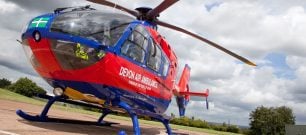
Devon Air Ambulance had other ideas. Working with Health Education England and the Peninsula Emergency Medicine Deanery, they developed a training pathway that hadn’t existed before. They created a role that allowed some of the ‘educational time’ in emergency medicine to be spent learning and working in prehospital care with Devon Air Ambulance. The post was designed to be part-time and flexible, running alongside senior emergency medicine training, and with the aim of developing a critical care doctor.
I applied, and while the process was still competitive, it was one I could approach knowing I could remain working where I had built my life. I was successful.
Why this matters beyond me
Traditionally, prehospital emergency medicine has not been seen as a diverse specialty and has been portrayed in ways that reinforce male-dominated stereotypes. This has discouraged some highly capable clinicians, including many women, from seeing it as a space where they belong.
This is not because women are unsuited to the work, but because the systems and structures have not always reflected the realities of their lives. Expectations around training locations and the assumption that people can easily relocate are significant considerations, and these can disproportionately affect women, particularly at a stage of life when many are thinking about starting, or already have, a family.
What Devon Air Ambulance created isn’t just ‘a nice thing to have’. It’s a model. It demonstrates that with partnership, and genuine commitment to equity, it is possible to make careers in prehospital medicine accessible to people who might otherwise have been discouraged. Not because they lowered the bar, but because they removed an entirely unnecessary barrier.
I hope other air ambulance organisations, deaneries, and training bodies see what Devon Air Ambulance has achieved and ask themselves: what could we do differently too?
Training, becoming a mum and sign off
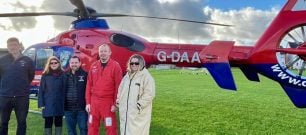
Over the years of my training placement, I have been on an extraordinary professional journey. Along the way, I have built strong relationships with incredible colleagues across the clinical and operational teams, learning as much from them as from the work itself.
Last year I took a year away for maternity leave. Pregnancy in a prehospital setting can be challenging, yet Devon Air Ambulance supported me every step of the way. From the moment I discovered I was pregnant through to my return to work, the people, clinical, and leadership teams supported me fully. I even had the opportunity to help shape the organisation’s guidance, contributing to formal policy that will support future trainees and staff.
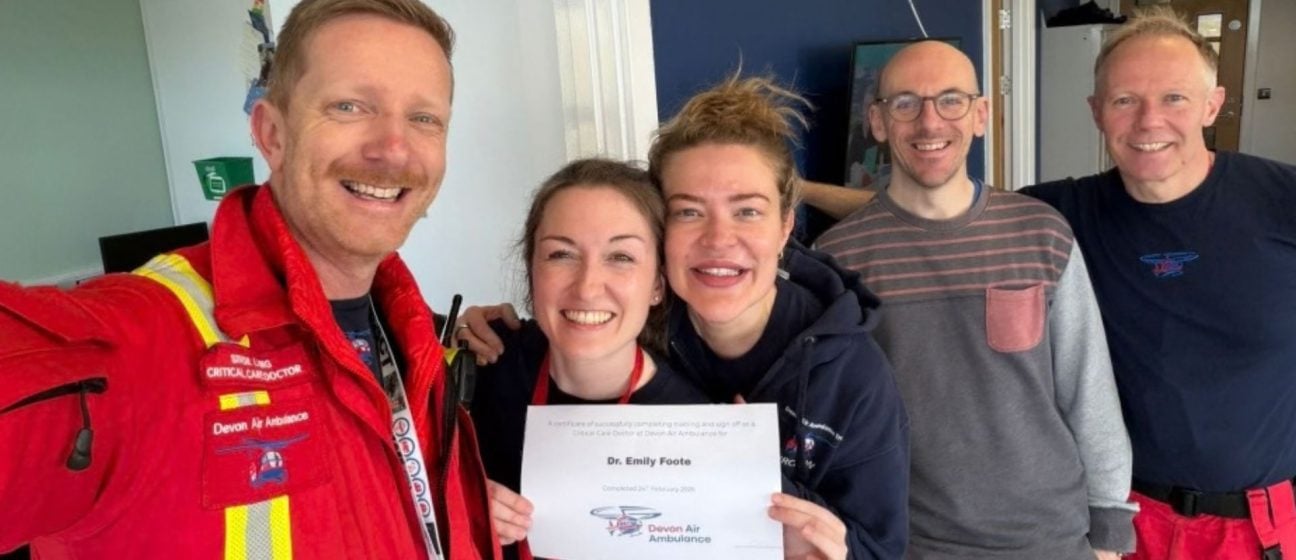
Returning to the role brought its own challenges, balancing the demands of critical care, emergency medicine training and life as a mum, with my son having just turned one. Last week, I was proud to be signed off to work as an independent Critical Care Doctor on Devon Air Ambulance, giving me the privilege of providing prehospital critical care to the people of Devon.
I hope in the future my son will be proud too, this journey has been as much about shaping the doctor I am as it has been about showing him what dedication and hard work can achieve.
This International Women's Day
To any woman thinking about a career in prehospital medicine: you belong here. Your skills, perspective, and compassion are needed at the roadside, and every step you take helps shape a system for those who come after you.
And to Devon Air Ambulance – thank you recognising the need for change and making it happen. I am incredibly proud of what I have achieved, and deeply grateful to everyone who has supported me along the way.
To those who created this training post, my educational supervisor, and the paramedics, pilots, and doctors who have guided me – your support has been invaluable. And to the extraordinary women on my team, who have shown me the true power of leadership, resilience, and teamwork – you inspire me every day.