Ten years ago Doctors joined our paramedics on board the aircraft. Here's what a difference that made to the service.
A decade of lifesaving innovation with Devon Air Ambulance
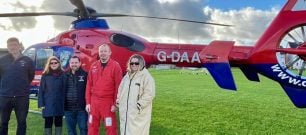
Ten years ago, a conversation in a meeting room changed the future of emergency care in Devon. In June 2015, Dr Kate Sharpe and Dr Tim Nutbeam sat down with Darren Goodwin from Devon Air Ambulance to explore an ambitious idea: bringing doctors on board the charity’s aircraft. The goal was simple but transformative: combine the expertise of doctors with the skill of paramedics to create a Critical Care Team capable of delivering hospital-level interventions at the roadside.
‘”‘When we started, the helicopter was mainly about getting patients to hospital quickly,’ Kate recalls. ‘Paramedics were doing an incredible job, but some interventions – like pre-hospital anaesthesia or thoracotomy – just weren’t possible. We wanted to change that.’
Fast forward to today, and the difference is remarkable. Devon Air Ambulance now operates a doctor-led service from 7am to 7pm, with advanced-level paramedics and doctors working side by side. They’re called to the most complex emergencies – major trauma, cardiac arrests, paediatric crises – bringing critical care to patients when every second counts.
From helicopter transport to critical care
The journey hasn’t been easy. When Kate joined the team in 2016, she had already worked for other helicopter emergency medical services in the UK and overseas. Devon was starting late compared to some regions, but the ambition was clear.
‘We knew we had to build something special,’ says Kate. ‘The Faculty of Pre-Hospital Care had only just come into being in 2012, and Plymouth became a major trauma centre that same year. Networks were changing, and we wanted Devon to be part of that evolution.’
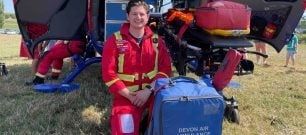
Today, the team’s capabilities are unrecognisable compared to a decade ago. They carry advanced drugs, blood products like freeze-dried plasma, and equipment for procedures that were once only possible in hospital.
‘We’ve kept patients alive who almost certainly would have died ten years ago,’ Kate says. ‘That’s down to the skills, the kit, and the teamwork.’
The power of clinical governance
Behind the scenes, a process called clinical governance drives this excellence. It’s a structured way of learning from every case – what went well, what could be better, and what new evidence might change practice.
‘Each month we review cases, and crews do a rapid peer review within hours of a job,’ Kate explains. ‘If there are themes, I bring that learning back to the team. It’s about constantly improving.’
This isn’t just about fixing mistakes. It’s about anticipating challenges and introducing new techniques safely. When ketamine was first introduced, every case was scrutinised. Now, it’s routine.
‘We’re constantly learning and reviewing the tools and drugs we use to secure better outcomes for patients,’ Kate says.
Education and simulation: Preparing for the rare
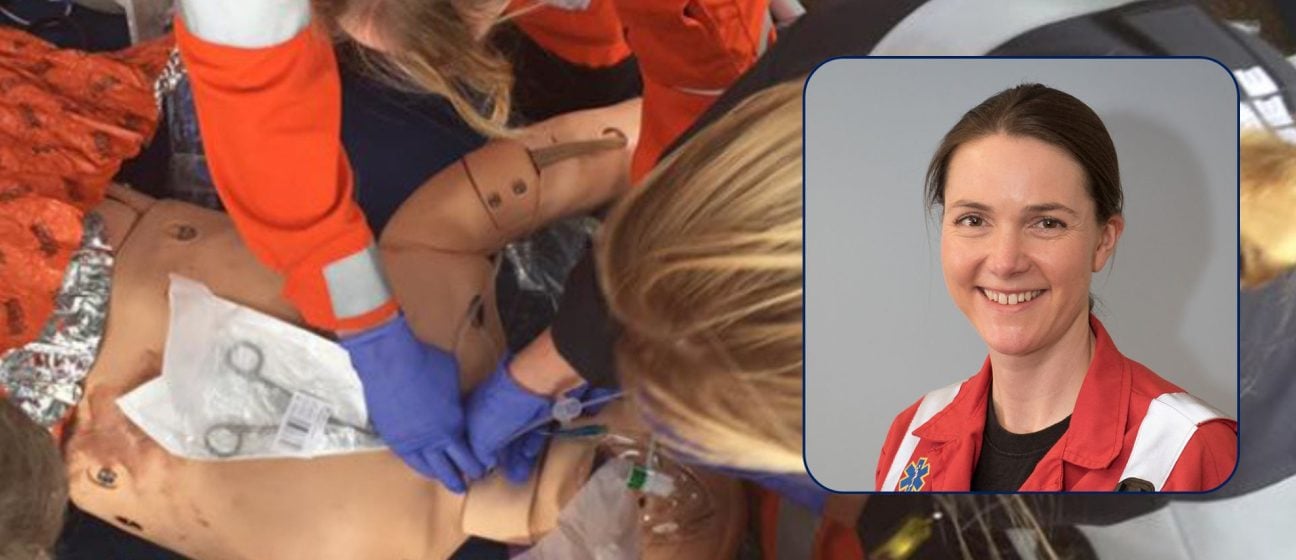
Education is at the heart of the team’s culture. Monthly governance days include case reviews, journal clubs, and simulation training.
Our recent paediatric simulation session was excellent,’ Kate shares. ‘Dealing with critically ill babies is rare, so we rehearse those high-acuity, low-occurrence scenarios. From tiny syringes to incubating babies and loading them onto the helicopter – it’s all about being ready.
The team also opens these sessions to medical students, road paramedics, and allied services, spreading knowledge across the emergency care network.
We’re not just educating our own team; we’re educating the partners we work with, Kate adds.
Looking ahead: The next chapter
As Devon Air Ambulance celebrates this tenth anniversary, the focus is on consolidating achievements and shaping the future.
‘We’ve had this big acceleration,’ Kate reflects. ‘Now we need to decide what we’ll be really good at – whether that’s teaching pre-hospital care or leading research. Whatever we choose, it will be about delivering the highest quality care for patients.’
For Kate, the milestone is personal.
‘I enjoy being reflective about the jobs we’ve done and what learning can come from them,’ she says. ‘It’s been a team effort to develop this service, and we’re proud of where we’re at – and excited for what’s next.’
Devon Air Ambulance’s journey from helicopter transport to a doctor-led critical care service has transformed emergency care in the region. Ten years on, the mission remains the same: to give patients the best possible chance when life hangs in the balance.
And that’s thanks to you your support. Thank you.